 Liberty Chimney Service
Chimneys sit on top of the house with no shelter. Mortar joints are softer than brick by design, so they give way first. That is normal, and it is repairable, as long as the brick underneath is still sound.
The real question is how far the damage has spread. Use the clues below to place your chimney in one of three groups: joints only, joints plus some brick, or a stack that has moved.
Start by sorting mortar from brick
Photograph the chimney from several angles, then compare the pictures with a second set a few months later. Damage that holds steady is easier to plan around than damage that spreads.
Look at the stack from the yard, using binoculars if you have them. Do not lean a ladder against it. You are checking two separate things.
| What you see | What it points to |
|---|---|
| Joints recessed, sandy or missing | Mortar wear |
| Gaps you can slide a coin into | Mortar wear, well advanced |
| Brick faces peeling or flaking off | Brick damage (spalling) |
| Cracks running through bricks | Brick damage, possibly movement |
| Stack leaning or bricks shifted | Structural problem |
The first two rows are usually a job for tuckpointing. The next two involve masonry repair. The last one is the case where the discussion turns to rebuilding.
What tuckpointing involves
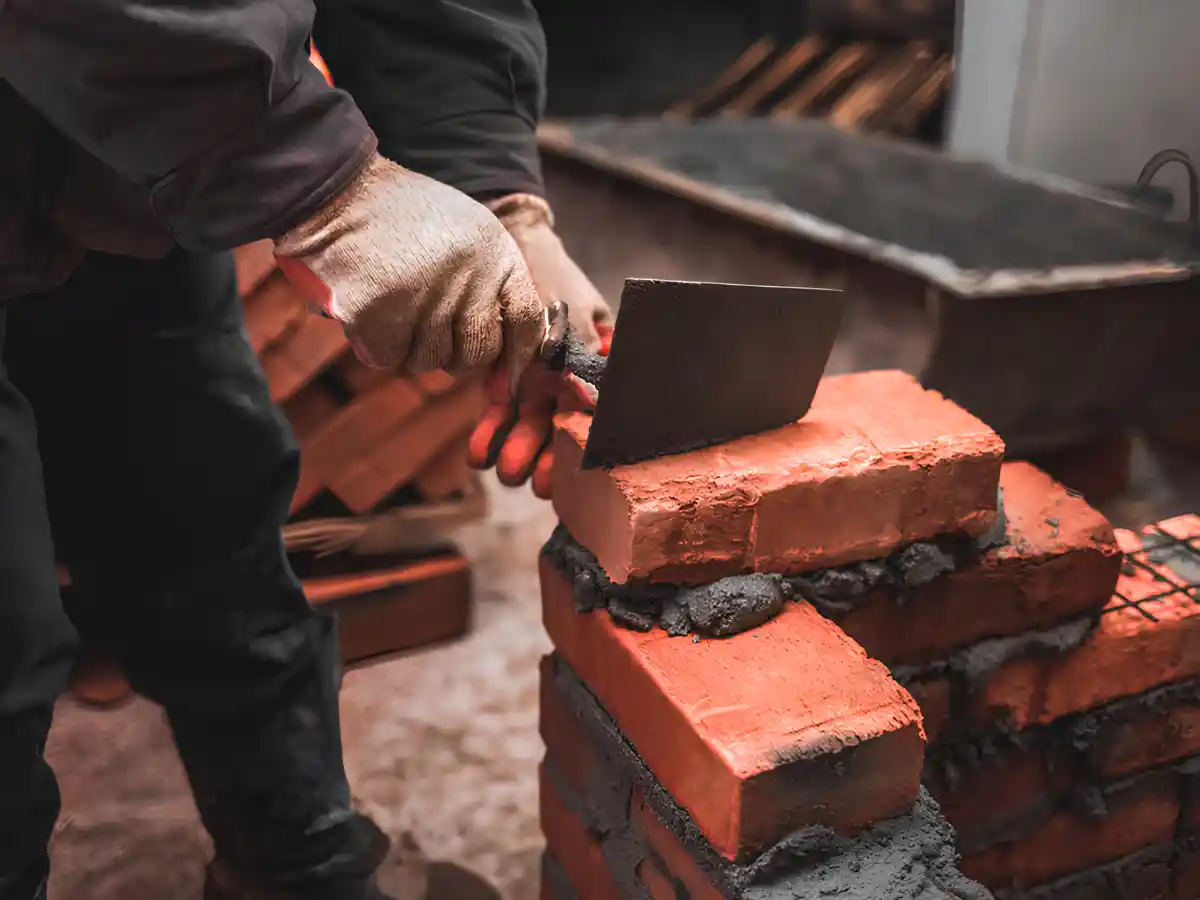
A mason grinds out loose mortar to a consistent depth, cleans the joints, and packs in fresh mortar in layers. The finish is tooled so water runs off rather than collecting.
- Remove failed mortar without chipping the brick edges
- Brush and rinse out dust so the new mortar bonds
- Fill the joints in layers and tool them to shape
- Check for any bricks that need replacing before closing up
Mortar that is harder than the surrounding brick can cause the bricks to crack. A mason matches the mix to the existing masonry, which is especially important on older stacks.
Weather affects timing. Mortar needs to cure without freezing or baking in direct sun, so masons plan around the forecast, and a day lost to rain is normal rather than a sign of trouble.
When brick is the problem
Individual damaged bricks can be cut out and replaced, with new mortar worked in around them. This is spot repair. It works when the damage is limited and the neighbors are in good shape.
Widespread spalling is different. If the face of most bricks is flaking, replacing a handful will not hold. Water is getting into the wall through something else, often a cracked crown or failed flashing, and that source has to be dealt with too.
Why the source matters
Fresh mortar and new brick will fail again if water keeps entering from above. A good repair plan lists the cause and the fix together, not just the visible damage.
Color and texture also deserve a conversation. Older brick often has a finish that is no longer sold, and a mason may blend replacements from salvage or choose the nearest available match. Ask to see a sample against the wall before the work begins.
Signs the stack needs to come down
A rebuild takes the chimney apart above a chosen point and lays it back up. It is the answer when the masonry can no longer carry a repair.
- The stack leans or has visibly shifted at the roofline
- Large sections of brick are loose, cracked through or crumbling
- Repeated repairs have not stopped the deterioration
- Mortar has failed deep into the wall, not only at the surface
- An inspection found movement in the flue or firebox structure
Loose or shifting masonry can send bricks onto the roof, yard or walkway. Stay clear of the area below the stack, skip fires and book an inspection instead of attempting a fix.
Getting a clear answer
Photos help, but a close-up inspection settles it. Ask the mason to show you what they found, point out which bricks and joints are affected, and explain why the repair they suggest suits the damage. If the answer is partial rebuilding, ask where the rebuild would start and why there.
Cost depends on the amount of mortar involved, how much brick is damaged, how tall the stack is and how hard it is to reach. A written scope makes quotes easier to compare.
Need it fixed?
Chimney Tuckpointing across Colorado and Orange County
Describe the problem by phone or form, and a technician will set up a visit.
Frequently asked questions
Can tuckpointing fix a leaning chimney?
No. Tuckpointing renews joints in a sound wall. A stack that leans or has shifted has a structural issue, and the mason will look at partial or full rebuilding instead of filling in mortar.
How can I tell if the brick or the mortar failed first?
Check whether the brick faces are intact. Sandy, recessed joints with solid brick suggest the mortar went first. Flaking faces with firm joints suggest moisture damage to the brick itself.
Does patching a few bricks make sense?
When damage is isolated, yes. When many bricks are flaking, spot repairs only delay the next round. Fixing the water path matters as much as replacing the damaged units.
Will the repaired area look different?
Some difference is common at first. A mason selects mortar color and brick to blend with the existing stack, and weathering narrows the contrast over time.